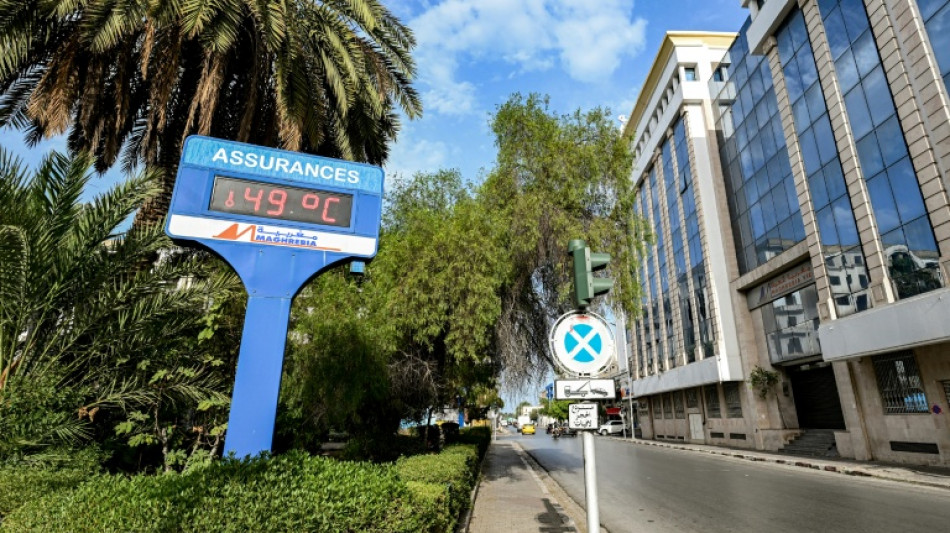
Tunisia says 2026 summer hottest on record / Photo: FETHI BELAID - AFP
Tunisia's summer this year was its hottest on record, the country's weather authority said Tuesday, following multiple heatwaves, water shortages and power cuts.
"The summer of 2026 was ranked the hottest in Tunisia since 1950," the year temperature records began, the National Meteorological Institute said.
The average temperature was about 2.9 degrees Celsius higher than the previous record, it added.
Although accustomed to scorching heat, Tunisia experienced a particularly gruelling summer this year, with July and August marked by "intense and prolonged heatwaves", the authority said.
Scientists attribute these episodes to climate change.
This summer also saw persistently high nighttime temperatures, the agency added.
The highest temperature was recorded in the central city of Kairouan, which reached 49.7 degrees Celsius in mid-July.
Temperatures also reached 49.2 degrees Celsius in Beja in the northwest, and in the south they reached 48.4 degrees Celsius in Tozeur.
Authorities have yet to provide figures on the health impact of the heatwaves, but a group representing young Tunisian doctors reported numerous deaths it said were caused by the heat.
The Tunisian League for Human Rights (LTDH) documented 23 deaths in prisons, citing harsh conditions worsened by the high temperatures and overcrowding in cells.
President Kais Saied has said the outages, which sometimes lasted more than 10 hours, including in the capital, were "not simply temporary or isolated cases" and "did not result from ordinary breakdowns".
Instead, they were part of "criminal plans" and "attempts at provocation".
State-run electricity company STEG had said the power cuts were used for load shedding in order to ease pressure on its network.
Water cuts also became frequent, as much of Tunisia's water supply depends on electric pumps, which were disrupted during power outages.
The water cuts were compounded by a shortage of bottled water, also linked to the power outages.
W.Lievens--JdB