NYSE - LSE
New UK PM Burnham announces tax cut after cabinet shakeup
New UK Prime Minister Andy Burnham announced a tax cut to ease cost-of-living pressures as he was set to convene his first cabinet meeting on Tuesday.
After a day earlier replacing Keir Starmer in Downing Street and purging the government of his predecessor's loyalists, the 56-year-old on Tuesday morning said he was cutting value added tax on consumer electricity bills.
The new business minister Jonathan Reynolds told Sky News this was a "tremendous announcement for the first day of the new cabinet", which was due to meet Tuesday afternoon.
The measure cuts the 5 percent tax from October and will trim about £45 ($61) a year off, and will be initially funded by cancelling a plan to introduce digital IDs.
It came after Burnham promised to "give people some breathing space now, some help with the cost of living".
Burnham pledged to re-industrialise Britain and decentralise power as well as end sleeping rough on the streets after he met King Charles III at Buckingham Palace to become the head of government following Starmer's departure.
The monarch's fourth prime minister since he acceded to the throne in 2022 -- and Britain's seventh in just over a decade -- Burnham said the country needed to show the world it could "regain stability".
Standing outside his new official residence at Number 10, he vowed to create "a new political model" and "build a new economy".
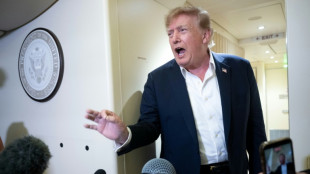
In his first call with US President Donald Trump, Burnham underlined his "commitment to defence and security", a UK government spokesperson said.
Trump said he had a "very good conversation" with Burnham and that the two leaders would meet "in the not too distant future".
Burnham "has got a big job ahead of him, but he will be able to do it and, of course, the U.S.A. will be there to help!" Trump posted on Truth Social, noting they discussed trade, military cooperation and demining the Strait of Hormuz.
To Ukrainian President Volodymyr Zelensky, Burnham reaffirmed Britain's "resolute commitment" to Ukraine in its defence of Russia's invasion, according to Downing Street.
French President Emmanuel Macron sent congratulations, urging Burnham to "give new momentum to the partnership" with the European Union.
Burnham moved swiftly to stamp his authority on the new government by sacking several Starmer loyalists from his cabinet, including Rachel Reeves and former deputy prime minister David Lammy, while moving some ministers to other jobs and promoting allies.
- 'Stronger and fairer' -
Ex-defence secretary John Healey replaced Reeves as finance minister, Ed Miliband became foreign minister and left-wing figurehead Angela Rayner returns to government.
Wes Streeting, who abandoned plans to run against Burnham for the Labour leadership, is now defence minister.
Shabana Mahmood was reappointed interior minister to see through her hardline reforms of Britain's asylum system.
In his brief speech, Burnham said he would "bring forward a new plan for Britain, a 10-year plan", without giving specifics.
Starmer had similarly talked of his intention to lead a "decade of national renewal" before Labour MPs ditched him last month in favour of Burnham, who only returned to parliament four weeks ago.
Burnham also said his first instruction would be a pledge to "end rough sleeping", a measure he attempted to implement as a regional mayor in northern England, although it was not fully successful.
Other announcements included a vague promise to re-industrialise Britain through public procurement and to build more public housing.
He repeated his belief that "in the 1980s Britain took some wrong turns", as he pledged to decentralise power away from Westminster and "put life's essentials back under stronger public control to make them affordable".
Starmer departed Downing Street insisting his two years in office had made Britain "stronger and fairer".
- 'Momentum' -
Starmer leaves multiple challenges for Burnham, including a tepid economy, high government borrowing costs, a ballooning welfare bill and irregular migrants arriving in small boats that have fuelled support for the hard-right Reform UK party.
Unpredictable energy prices due to the US-Iran war and volatile relations with Washington under Trump also threaten to buffet his premiership.
Burnham, an MP between 2001 and 2017, has little room to manoeuvre amid high public debt and strict financial rules requiring him to balance government spending against tax revenue.
Starmer led Labour to a landslide election victory in July 2024 after 14 years of Conservative rule, but his premiership became characterised by scandals, missteps and policy U-turns.
Burnham, the ex-mayor of Greater Manchester nicknamed the "King of the North", was parachuted in by Labour after Starmer resigned, with MPs viewing him as the party's best chance of reining in Reform, led by Nigel Farage.
But his swift "coronation" without a contest as Labour leader and now prime minister, by virtue of Labour's huge parliamentary majority, has raised questions about how he will achieve his aims.
Opposition politicians have questioned his mandate and called for a snap election.
T.Moens--JdB