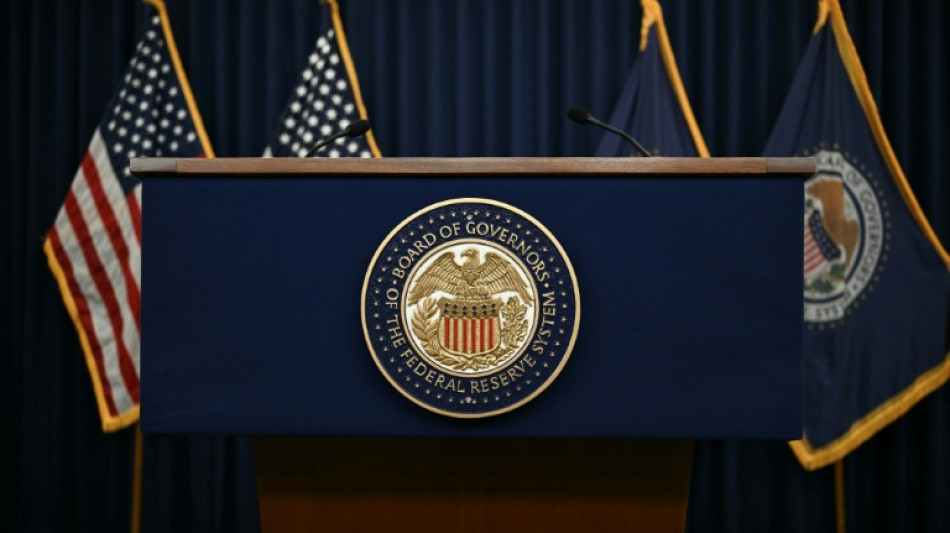
Some US Fed officials considered June rate hike on war fallout / Photo: Brendan SMIALOWSKI - AFP/File
Some US Federal Reserve officials saw reasons to hike rates at the central bank's June policy meeting given elevated inflation on fallout from the Middle East war, minutes of the gathering showed Wednesday.
Coupled with steady job market conditions, "a few participants commented that, in light of these developments, there was a case for raising the target range for the federal funds rate," the report said.
Still, Fed officials eventually voted unanimously to keep interest rates unchanged at their June 16-17 meeting.
The minutes come under heightened scrutiny as they shed light on the bank's first rate decision with new Chairman Kevin Warsh at the helm.
Warsh, President Donald Trump's choice to succeed Jerome Powell and lead the central bank, earlier said officials had a "good family fight" during their last meeting.
Policymakers who mulled rate hikes nonetheless "indicated that they supported maintaining the current target range at this meeting," the Fed minutes said Wednesday.
Officials considered various scenarios involving the world's biggest economy, and almost all indicated that "some policy firming would likely be warranted" if inflation stayed high and the labor market was stable.
This could mean higher rates if the jobs market held steady while inflation was elevated due to factors like AI-related demand, war in the Middle East, or the effects of Trump's tariffs.
Last month, the Federal Open Market Committee (FOMC) kept interest rates unchanged for a fourth straight time, at a range between 3.50 percent and 3.75 percent.
Many policymakers also projected at least one rate hike by year-end to counter inflation, which is at three-year highs and above the bank's two percent target.
The Fed, which has a dual mandate of maintaining stable prices and maximum employment, said in a shorter statement than usual that inflation was elevated partially due to supply shocks that raised energy prices, triggered by Trump's war on Iran.
Warsh has since vowed to fight "too high" costs, reiterating that the central bank plans to deliver price stability in the economy.
With the Fed's latest statement being stripped of forward guidance on the direction of interest rates, markets have sought more details on the bank's thinking.
"So far, the Warsh Fed is, somewhat intentionally, hard to read," said economist Oliver Allen of Pantheon Macroeconomics.
He noted that the bank's statement indicates recent data had "solidified participants' worries about inflation, while reducing those around the labor market."
The minutes also suggest that the FOMC "remains genuinely conflicted and uncertain about the best next step for policy," Allen said.
While oil prices cooled recently following a temporary US-Iran deal, they surged again Wednesday as hostilities restarted and Trump declared the ceasefire "over."
That could fuel a further inflation uptick as costs trickle through the economy.
W.Lejeune--JdB