Kauaʻi Mayor-Elect Mel Rapozo Prioritizes Infrastructure and Waste Management
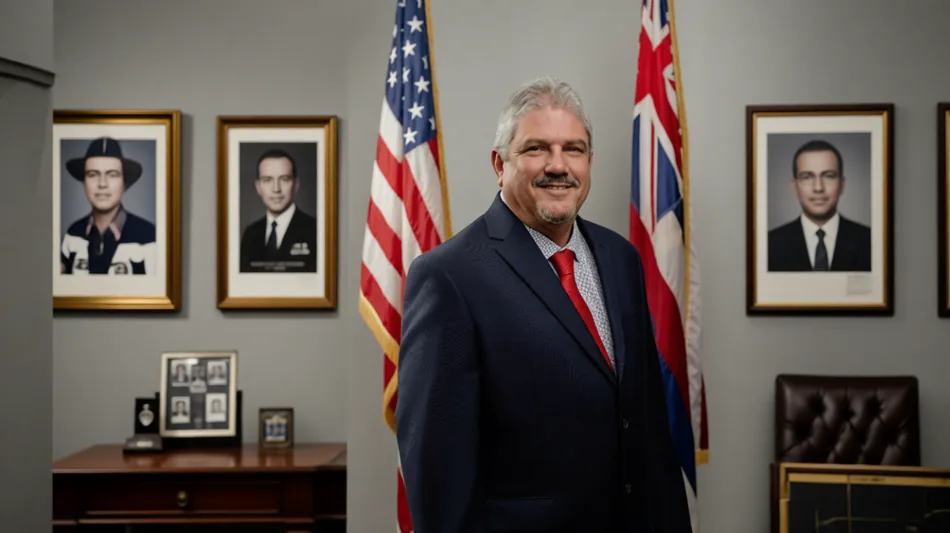
Kauaʻi County Council Chair Mel Rapozo is set to assume the role of mayor in December, bringing a focus on critical infrastructure challenges. Following his election, Rapozo outlined plans to address solid waste crises, relocate wastewater facilities, and expand recycling access while managing tight county budgets.
Mel Rapozo is preparing to assume office as the mayor of Kauaʻi County in December, with a platform centered on urgent infrastructure needs and fiscal responsibility. The incoming chief executive has identified solid waste management, wastewater facility relocation, and park improvements as primary objectives for his administration.
Rapozo, who currently serves as chair of the Kauaʻi County Council, told Aloha State Daily that while infrastructure was a priority before his candidacy in February, recent events have intensified the urgency. The county is now dealing with recovery efforts from Hurricane Lowell in August and a fire at the Kāpule Building at the Līhuʻe Civic Center in September.
"Infrastructure was a priority before the storm and it remains a priority," Rapozo said. "There’s a lot of infrastructural needs that need immediate attention."
A central component of his agenda is addressing what he described as a "crisis mode for solid waste." The county’s landfill in Kehaka is projected to reach capacity by 2030. To extend the life of the existing site, Rapozo plans to expand recycling programs and implement a curbside collection system.
Currently, Kauaʻi residents must drop off recyclables at eight designated sites around the island. According to county data, only 43% of residents utilize these services. Rapozo argued that increasing convenience is essential for improving participation rates.
"We need to get as much life out of the existing landfill as we possibly can and diversion is the only way we can do that," he said. "We have to make it convenient for the public if we’re not going to see any improvement."
He noted that the new curbside program may initially involve increasing the number of drop-off sites before full implementation.
Funding these initiatives presents a significant challenge. Rapozo stated he intends to reprioritize projects within the county’s Capital Improvements Project (CIP) to reallocate funds toward critical needs. This strategy involves delaying, postponing, or canceling projects that are no longer deemed necessary for the island.
"We need to move projects that are not moving," Rapozo said. "The critical needs are great right now and we’re going to have to be very frugal with our funds."
He did not specify which projects would be cut, stating his administration would conduct a "deep dive into our CIP budget" to determine necessary adjustments.
Beyond infrastructure, Rapozo emphasized a desire to change the relationship between the government and its constituents. He aims to establish an office of accountability on Kauaʻi to serve as a centralized point for residents to report concerns and track resolutions.
"I’m hoping that we will change the mindset or the perception of our constituents as an administration that listens and responds," he said. "I believe that an engaged community produces a good government."
Rapozo’s path to the mayor’s office spans decades of public service. He began his career in the 1990s as a detective with the Kauaʻi Police Department. His entry into politics was prompted by a friend who pointed out "red flags" in a county audit. After testifying before the county council and feeling ignored, he ran for the council in 1998. Although he lost that election, he spent the next four years monitoring county issues closely before winning a seat in 2002.
He has served on the council for 18 years, including his current role as chair. Rapozo explained that he sought the mayoral position because he believed significant change could only be achieved at the executive level.
"I’ve come to the point in my council career that I’ve done pretty much all I can do as a legislator in the legislative branch and the change that I want to see happen can only be done that at the administrative level or executive level," he said.
Rapozo also highlighted his work on property tax relief for long-term residents. On November 18, the finance and economic development committee advanced a bill he introduced to create an 'Āina Kūpuna real property tax dedication for families who owned properties prior to statehood. He expressed concern that high taxes were forcing multi-generational families to sell their homes.
"I only wish I had introduced this bill sooner," Rapozo said.
As he transitions into his new role, Rapozo is currently interviewing candidates for department director positions. He described the mayor’s job as providing resources while directors create the pathways to execute policy.
Rapozo, who grew up on Kauaʻi and lives in Wailua with his wife, Patsy, cited his long-standing community involvement as a foundation for his leadership. He volunteered with the Kauaʻi Pop Warner Football League for 30 years and remains active in local events.
"Every opportunity to help my community, I’m there," he said. "I love Hawaiʻi, I love this island," adding that he wants to do "whatever I can do to make this a better place."
He is an avid sports fan who enjoys local basketball and baseball, as well as watching the Pittsburgh Steelers.
U.Dumont--JdB