Abdul El-Sayed Wins Michigan Senate Seat in Historic Election
Democrat Abdul El-Sayed has defeated Republican Mike Rogers in Michigan's US Senate election, making the epidemiologist the first Muslim elected to the chamber.
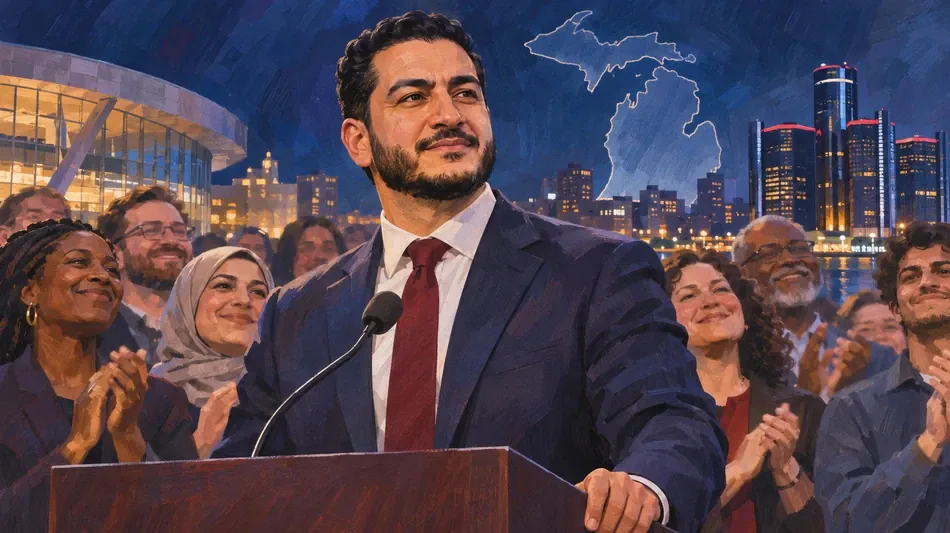
Democrat Abdul El-Sayed has won Michigan's open US Senate seat, defeating Republican Mike Rogers in one of the most closely watched contests of the 2026 midterm elections. The 42-year-old epidemiologist will become the first Muslim elected to the United States Senate when he takes office.
The victory keeps the seat previously held by retiring Democratic Senator Gary Peters in Democratic hands. Michigan was considered a crucial battleground in the contest for control of the Senate, and El-Sayed's win also represents a significant breakthrough for the progressive wing of the Democratic Party.
El-Sayed emerged from a closely fought Democratic primary in which he defeated Representative Haley Stevens by a narrow margin. His primary victory came despite concerns among some party officials that his progressive positions could make the general election more difficult. In the final campaign, he faced Rogers, a former member of Congress who was endorsed by President Donald Trump.
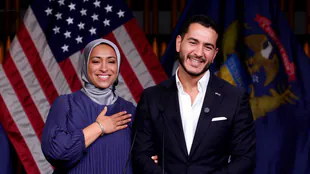
During his election-night address, El-Sayed responded to personal attacks that had focused on his Muslim faith and his name. Trump had repeatedly called him a jihadist and at one point suggested that metal detectors would be needed for him in the Senate. El-Sayed rejected those characterizations and told the president that, after his inauguration, Trump could simply call him senator.
El-Sayed's supporters described attacks centered on his religion and identity as Islamophobic. His victory marks a historic expansion of Muslim American representation in national politics and follows a campaign in which his background became a recurring subject of partisan debate.
The election was also shaped by sharp disagreements over US policy toward Israel and the Palestinian territories. El-Sayed strongly criticized Israel's military operations in Gaza and questioned Washington's traditional support for the Israeli government. Republicans and some Democrats argued that he had not clearly affirmed Israel's legitimacy, while El-Sayed and his allies emphasized Palestinian rights and opposition to civilian suffering.
A separately funded online advertisement intensified that dispute. The video linked higher prices in the United States to American spending in support of Israel. It was produced by Rebellion PAC, an organization associated with political commentator Cenk Uygur, rather than by El-Sayed's official campaign. A campaign spokesperson distanced El-Sayed from the advertisement after it had circulated widely on social media.
The controversy contributed to a rare split within the Democratic Party. Stevens, who had lost to El-Sayed in the primary, withdrew her support and endorsed Rogers shortly before the general election. She cited disagreements over El-Sayed's approach to Israel. Her decision to back the Republican nominee highlighted the intensity of the divisions surrounding the race but did not prevent El-Sayed from winning.
El-Sayed is a physician, epidemiologist and former public health official. His campaign combined progressive social policies with proposals addressing healthcare, household costs and economic security. In the final weeks, he also criticized the Iran war and the US trade dispute with Canada, arguing that ending both would help reduce pressure on businesses and consumers.
Rogers had previously run for the Senate in 2024 and lost narrowly. Republicans viewed the open Michigan contest as an opportunity to gain a Democratic seat, while Democrats treated it as central to their broader effort to win control of the chamber.
El-Sayed's victory has implications beyond Michigan. It provides evidence that a progressive candidate can win a statewide election in a competitive battleground, even after a divisive campaign. It may also strengthen progressives within the Democratic Party as they debate the party's direction ahead of the 2028 presidential election.
Once sworn in, El-Sayed will enter a Senate operating under new political conditions following the Democratic midterm victories. His work will include the same domestic and international issues that dominated his campaign, while his election will remain a milestone in the history of Muslim American political representation.
J.M.Gillet--JdB