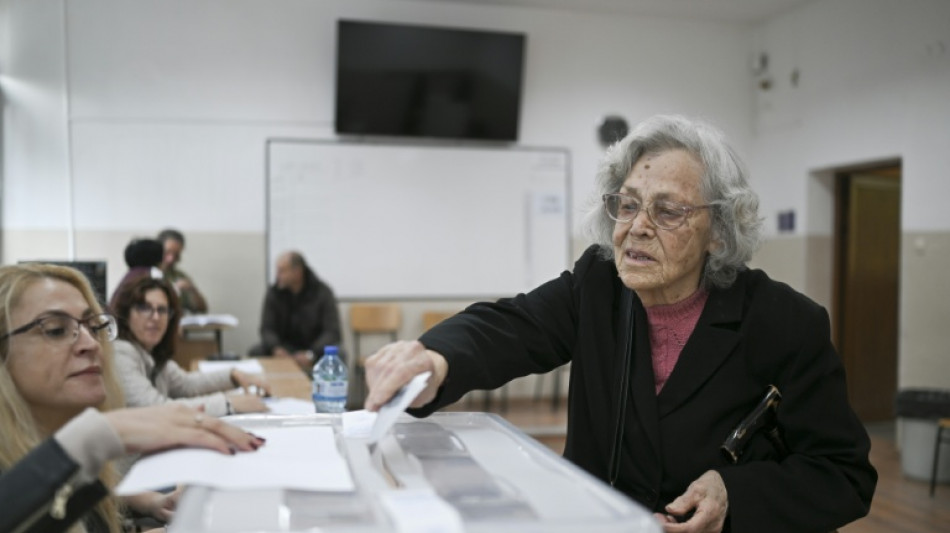
Ukraine war divides Bulgaria as voters elect president / Photo: Nikolay DOYCHINOV - AFP
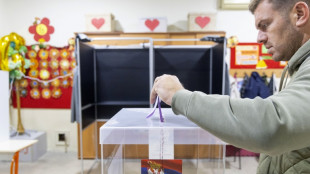
Bulgarians were voting in a presidential election on Sunday, as security concerns swirl following a series of drone attacks on ships in the Black Sea.
Polling stations opened at 7:00 am local time (0500 GMT) and close at 8:00 pm.
President Iliana Iotova, who favours dialogue with Moscow and opposes military aid to Ukraine, is the frontrunner for a new term in the largely ceremonial post, polls show.
After casting her vote, Iotova said she wanted to address "the dire issue of poverty" in the EU's poorest member state, "alongside inequalities and regional disparities".
"I believe that there must be peace, stability, and security," added the 62-year-old, who has made the war in Ukraine a central theme of her campaign, promising to be a "president of peace".
Her main challenger Andrey Gyurov, a banker and former caretaker prime minister backed by the pro-Western opposition, said he wanted "a Bulgaria that looks forward, a country that is European, free, and proud... and where the state works as it should".
Iotova took over this year as president of Bulgaria, a European Union and NATO member state, when Rumen Radev stepped down to run in parliamentary elections, eventually becoming prime minister.
If successful in a runoff set for November 1, she would become the first woman ever elected president in the country of 6.4 million people.
- Ship attacks -
A win for Iotova would be a boost for Radev, who has also called for dialogue with Moscow.
A former journalist and member of the European Parliament, Iotova was elected vice-president alongside Radev in 2016 and 2021.
Without questioning Bulgaria's membership of the EU or NATO, she opposes military aid to Ukraine and advocates negotiations.
Bulgaria has felt the effects of the Russia-Ukraine war more keenly this month as four vessels were struck off its coast, leaving 21 people missing, in suspected spillover from the conflict.
While Radev said the attacks appeared to serve Russian interests and summoned the Russian ambassador, his government insists there is so far no evidence directly linking Moscow to them.
With turnout at just 5.8 percent at 11:00 am local time, according to the Bulgarian electoral commission, voter Valentina Stoeva, 44, told AFP she hoped "that Bulgarians will go out and vote today".
"Our children deserve to live in Bulgaria, rather than wonder how to escape," she said.
- Competing visions -
Bozhidar Georgiev, 47, an IT worker, said he had "voted for Europe and Bulgaria moving at one speed and in one direction.
"Unfortunately, things in the country have changed dramatically, and in just three weeks it has become clear that the situation is growing serious to dangerous," he said.
"The candidates' foreign policy orientation is of great importance to me," said retired teacher Georgi Lyubenov, 77, without saying which direction he would like the country to go in.
Historically close to Russia, Bulgaria remains deeply divided over its relationship with Moscow.
Twenty-seven pairs of candidates for president and vice-president are competing in the first round, nearly half of them openly pro-Kremlin.
The election pits two competing visions of Bulgaria against each other, said political scientist Parvan Simeonov, founder of polling institute Myara -- one "conservative, popular and oriented toward the East" and the other "Western, elitist and liberal".
Gyurov, 50, has sharply criticised Radev's foreign policy and is a strong supporter of Bulgaria's Euro-Atlantic ties.
At his final campaign rally in Plovdiv on Wednesday, Gyurov said he wanted Bulgaria to be "a reliable ally within NATO, defending its interests through solid preparedness, strong diplomacy and clear positions".
"The election matters because the president symbolises the unity of the nation and the strategic direction it is heading towards," Vessela Tcherneva, deputy director of the European Council on Foreign Relations (ECFR), told AFP.
S.Vandenberghe--JdB