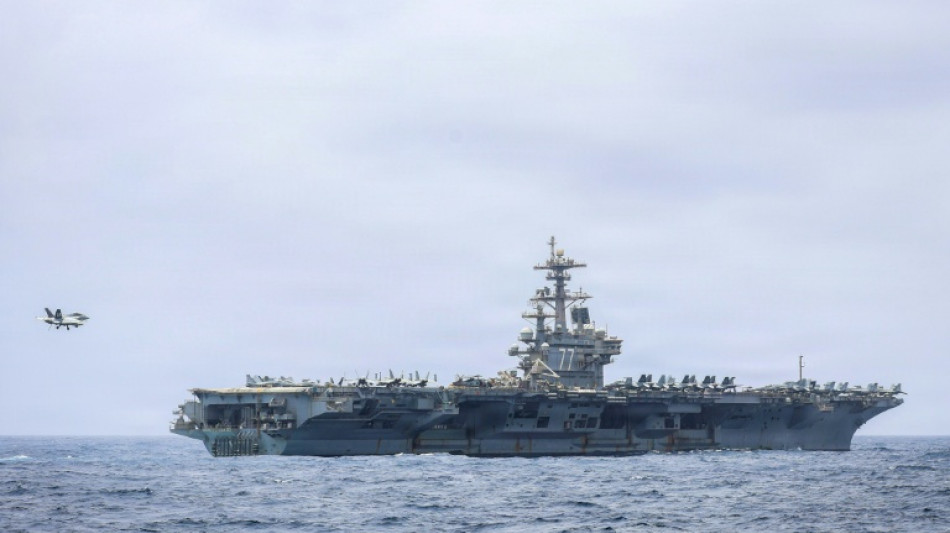
US, Saudi forces strike Iran-backed groups in Iraq / Photo: - - US NAVY/AFP/File
US and Saudi Arabian forces said they struck Iran-backed militants in Iraq on Wednesday in retaliation for recent attacks, following a short pause in Iran war hostilities.
The combined air operation came as President Donald Trump met with his Israeli counterpart Benjamin Netanyahu in Washington for their first in-person talks since the Middle East war began in late February.
Crude oil prices leapt more than four percent as the fresh Middle East flare-up revived fears over global supplies usually shipped through the pivotal Strait of Hormuz.
Retaliatory strikes by US and Saudi fighter planes hit logistics and weapons sites in eastern Iraq belonging to "Iran-aligned terrorists", the US military said.
Saudi Arabia's defence ministry said the "terrorist militias loyal to Iran" were linked to attacks on the kingdom's oil facilities.
A days-long pause in hostilities ended late Tuesday, when US forces reported intercepting missiles launched by Iran at American bases in the Gulf.
- 'Full control' -
Washington had said the cessation in fighting was aimed at kickstarting a new round of negotiations, including over the Strait of Hormuz.
Iran's IRGC said Wednesday it attacked and stopped three tankers in the strait, maintaining it has "full control" of the waterway.
Trump hosted Netanyahu at the White House on Tuesday for closed-door talks that the administration described as "positive and productive".
The discussions lasted for about an hour and a half and took place while Netanyahu and Trump seek to patch over public disagreements on the war.
Netanyahu said in a video message after the meeting that it was "one of the best conversations I've ever had with the president of the United States" and that it touched on "our common goal: ensuring that Iran does not obtain nuclear weapons."
Trump said only that the pair had a "very good meeting."
Israel has not taken part in the recent round of hostilities between the United States and Iran, which flared earlier this month as an April ceasefire collapsed.
- 'Very good meeting' -
Trump and Netanyahu had been expected to discuss the implementation of a US-sponsored framework deal signed by Israel and Lebanon last month, whose application on the ground has been challenging.
The talks were also expected to touch on Gaza, as diplomatic efforts to kick-start the devastated Palestinian territory's reconstruction are at a standstill.
It was not immediately clear Wednesday whether the leaders discussed those issues.
"Had a very good meeting!" Trump wrote on social media, alongside photos of himself with Netanyahu in the Oval Office.
"Obviously, many important subjects were discussed."
Nearly three years after the war between Israel and Hamas broke out, the humanitarian situation in Gaza remains dire, and Israel continues to regularly target people the military says are militants.
Danny Danon, Israel's ambassador to the United Nations, said Tuesday that Netanyahu's visit came at a "critical time for the Middle East," with Iran continuing "to choose terrorism over negotiations" and blocking the Strait of Hormuz.
- Tankers struck in Hormuz -
Control of the Strait of Hormuz remains a hurdle to any peaceful resolution to the Mideast war, and Iran insists on managing the crucial conduit for oil and gas.
Its powerful Revolutionary Guards have been stopping vessels trying to transit the trade route, saying Wednesday it struck three oil tankers "which ignored our warnings and continued sailing an unsafe and illegal route".
Tehran said earlier this week that it had held talks with Oman, which also borders the strait, on "common principles and operational mechanisms" to ensure the safe passage of shipping.
In June, Muscat and Tehran said they would discuss imposing service fees in the waterway, a move Washington opposes.
But Oman also angered Iran after saying vessels could transit the Hormuz strait via its waters, with Tehran responding by attacking ships.
E.Heinen--JdB