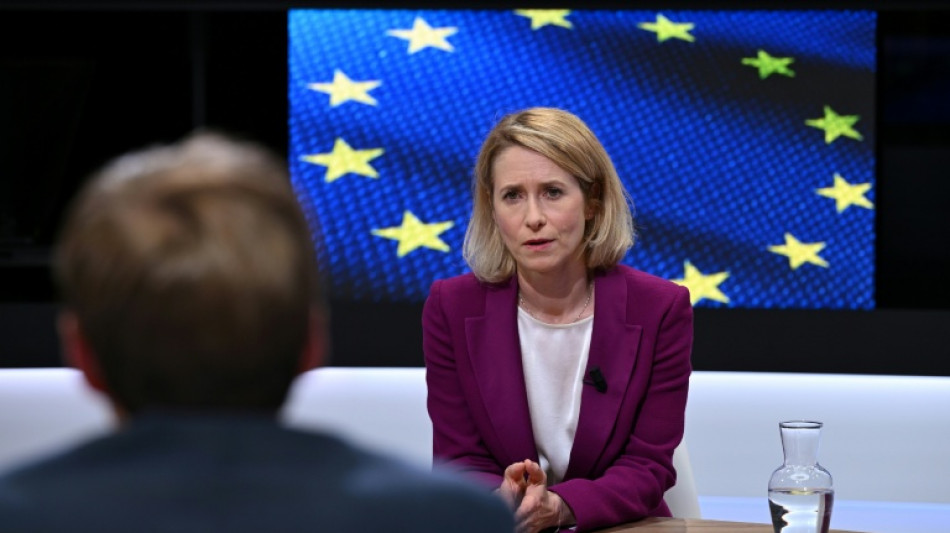
Ukraine drone strikes causing 'panic' for Kremlin: EU's Kallas to AFP / Photo: Nicolas TUCAT - AFP
Ukrainian drone strikes deep inside Russia are causing "panic" for the Kremlin, EU top diplomat Kaja Kallas told AFP Wednesday, saying Moscow was lashing out at Kyiv with increased attacks.
Ukrainian drones hit energy and military sites in Saint Petersburg on Wednesday as officials gathered for Russian President Vladimir Putin's flagship economic conference in the city.
"It clearly shows also panic on the Russian side -- why they are increasing the terrorist attacks that they're doing in Ukraine is because they don't know what to do with these things," Kallas said in an interview.
Ukrainian President Volodymyr Zelensky described the strikes as "fair" retaliation for Russia's bombardment of Ukraine and threatened to launch more.
"Ukraine has really increased the deep strikes against the oil facilities, because oil is something that is funding the war in Ukraine," Kallas said.
"We see at the same time that Putin is losing money, men, and momentum, and that's why he's increasing attacks on civilians."
The Russian leader has unleashed a series of ferocious drone and missile strikes against Ukraine in recent days, killing at least 23 people on Tuesday.
"He's clearly terrorising more to create fear, and because he's on a back foot in the battlefield," Kallas said.
"But I think they haven't been able to break the resilience of Ukrainians so far, and I doubt that they're going to do this with these attacks."
- 'Push them to talk' -
The European Union is currently readying a new round of sanctions against Moscow to try to ratchet up pressure on the Kremlin.
Kallas said a key part of the proposed package was aimed at trying to keep Russia's oil revenues down despite a spike in energy prices caused by the US-Israeli war on Iran.
We have "a very clear goal in mind targeting the military industry, targeting the financial institutions, so that they can't raise capital to finance this war", she said.
"At the same time we also need to increase support to Ukraine, so that they can defend themselves, because these attacks are atrocious."
As US-brokered talks to end the fighting in Ukraine have stalled, calls have grown for the EU to play a greater role in efforts to try to halt the war.
Kallas repeated her insistence that the EU could not act as a neutral "mediator" between the two sides given its staunch backing for Kyiv.
"Clearly the war in Iran and the Middle East and the Strait of Hormuz is taking the attention of the Americans, but I think more important so far we haven't seen the willingness from the Russian side to actually negotiate," she said.
"That's the most important, how we can push them to talk to the Ukrainians, so that they also make concessions that make Europe secure."
X.Maes--JdB