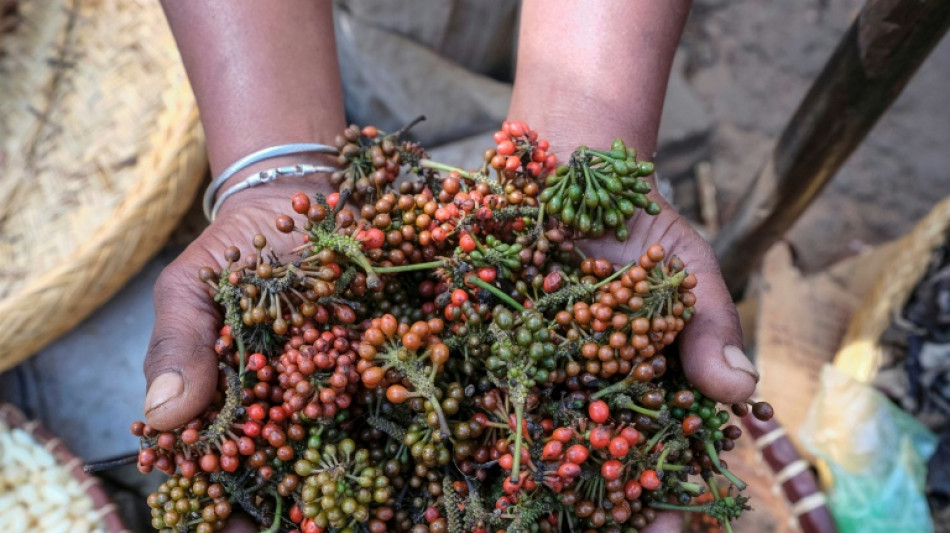
Prized wild pepper at risk in Madagascar's shrinking forests / Photo: Razafindrakoto Mamy Nirina - AFP
A rare wild pepper endemic to Madagascar and prized by international chefs is facing an uncertain future, victim of its own success and the destruction of its forest habitat.
With its subtle, aromatic flavour, Voatsiperifery pepper grows on vines that reach into the canopy of the island's natural forests, which shrank 27 percent between 1990 and 2025, according to the UN Food and Agriculture Organization.
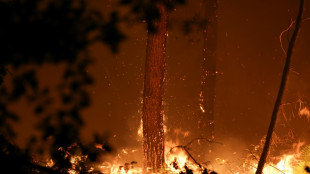
To reach the peppercorns without having to climb, harvesters often tear down the vine and, in many cases, the trees supporting them, contributing to the relentless retreat of Madagascar's forests.
"At times, I tell myself I should never have made it known," acclaimed French chef Olivier Roellinger, who first encountered the spice 30 years ago, told AFP.
"This pepper blew me away right from the start with that piperine punch that brings out a note of peat, resin, even citrus; it's incomparable," he said. "On a fruit salad, it's absolutely delicious."
Madagascar pepper sells for 150 to 200 euros ($169 to $225) per kilogram in France, its main export market.
Roellinger, the founder of the Epices Roellinger spice boutique, is collaborating with efforts to certify authentic pepper based on strictly regulated harvesting zones in Madagascar.
But he was "under no illusions" about the risk these rules could be circumvented, he said.
- Bush fires -
The village of Ambongamarina, northeast of the capital Antananarivo, was at the centre of a rush two decades ago for the pepper, which has a characteristic woody tail, a remnant of its stem.
From a ridge on which the village sits, farmer Maminiaina Rabearison pointed into the distance.
"Until 2010-2012, it was still covered in natural forest," he told AFP.
"People used to go into the forest and, for 10 to 20 weeks a year, at least 100 kilogrammes were sold every week at the market to a trader," the 45-year-old said.
That trader has not visited in a long time. Harvests have dropped as the forest has been consumed by bush fires, charcoal production and slash-and-burn agriculture, or torched in protests against the distant central government.
The destruction of the vines has also forced harvesters to go deeper into the forest to find the plant, which in Malagasy is called tsiperifery, meaning "that makes wounds not exist", a reference to its medicinal use for generations.
Now, "you have to walk almost a full day to find pepper in the forest," said 51-year-old Herinaina Randrianarimanga, another farmer from the village, which is only 120 kilometres (75 miles) from the capital but takes five hours to reach in a four-by-four vehicle.
- 'A real boon' -
There is no national system to track the distribution, harvesting and export of this precious pepper, said Mima Chateauneuf, co-founder of bulk export company Jacarandas.
"Today, we have no idea whether the resource is becoming scarce," she said, calling for "traceability" to determine export volumes.
In the absence of a regulatory framework, Jacarandas is turning towards organic pepper, which has grown to make up one-third of its exports. "For organic products, traceability is mandatory," Chateauneuf said.
As research into the Voatsiperifery plant advances, French-Malagasy entrepreneur Olivier Ramaherison has been experimenting with domestic cultivation on land inherited from his father.
Between 500 and 1,000 vines -- the result of thousands of trials -- grew in terraces carved into the Mandraka forest, 60 kilometres east of the capital.
There are no support trees here: the plants, laden with fruit just a few weeks from maturity, cluster close to the ground.
"The idea was to try to find a solution to make it easier to pick," said Ramaherison, head of Essentialys, a company that produces aromatic plants, essential oils, coffee and pepper.
By chance, his team discovered that cuttings taken from the horizontal branches of the vine no longer tried to climb.
"If, like at the Piper nigrum (black pepper) plantations in Vietnam or Brazil, we manage to produce hundreds of tonnes of wild pepper, it would be a real economic boon for the country," he said.
R.Michel--JdB