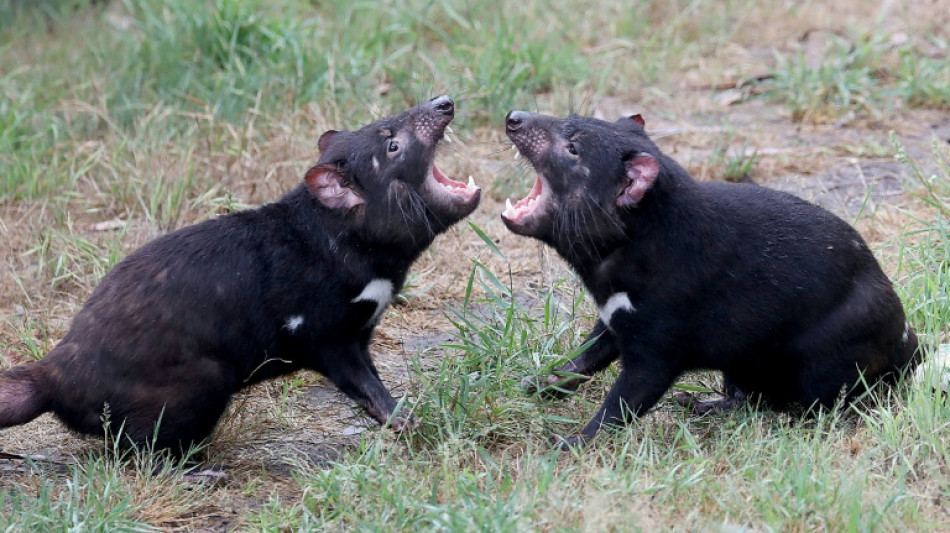
'Unstable' Tasmanian devil found after 15 days on the run / Photo: Sanka VIDANAGAMA - AFP/File
A Tasmanian devil named Mary has been found in an "unstable condition" more than two weeks after escaping her enclosure, an Australian wildlife park said Wednesday.
Searchers tracked down the carnivorous marsupial the previous night in the bush, less than two kilometres (1.2 miles) from her home in the Paradise Country park on Queensland's Gold Coast.
"Upon finding her, Mary was in an unstable condition, and the team assessed and determined she required veterinary care and rushed her to a specialist veterinary hospital where they were able to stabilise her condition," the park said in a statement.
The two-year-old furry critter, described by keepers as extremely shy, was being kept in the hospital for diagnostic testing, it said.
A dozen wildlife experts backed by a sniffer dog and a thermal-imaging drone had searched for the Tasmanian devil after her widely publicised break-out on June 2, partly captured in CCTV images.
The wildlife park said it believed Mary made an "abnormally large leap" to embark on her 15-day adventure.
Tasmanian devils -- agile, mostly nocturnal animals that can roam for 16 kilometres (10 miles) in a single night -- have been extinct on the Australian mainland for more than 3,000 years.
They can live up to six years in the wild, with males weighing as much as 14 kilograms (30 pounds) and standing 30 centimetres (12 inches) tall at the shoulder, according to Tasmania's environment department.
Though widespread on the island state of Tasmania, they are listed as endangered and face a significant threat from a transmissible cancer known as Devil Facial Tumour Disease.
W.Lejeune--JdB