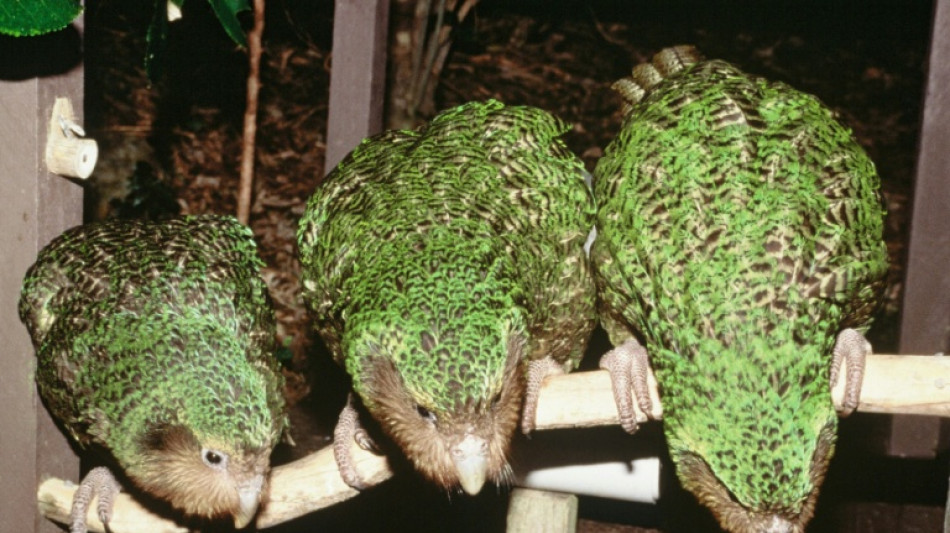
New Zealand's rare flightless parrot begins breeding again / Photo: Don Merton - DEPARTMENT OF CONSERVATION/AFP/File
New Zealand's critically endangered flightless parrot, the kakapo, started breeding last week for the first time in four years, the government conservation department said.
Only 236 of the rotund and regal-looking green parrots remain in three breeding populations on some of New Zealand's most remote southern islands.
That includes 83 breeding age females, with high hopes this year could bring the most hatched chicks since records began.
"It's always exciting when the breeding season officially begins, but this year it feels especially long-awaited after such a big gap since the last season in 2022," said Deidre Vercoe, the Department of Conservation's kakapo recovery operations manager.
"Now it is underway, we expect more mating over the next month and we are preparing for what might be the biggest breeding season since the programme began 30 years ago."
In 1995 the Department of Conservation and indigenous Maori tribe Ngai Tahu launched the Kakapo Recovery Programme, with a population of just 51 birds at serious risk of extinction.
By 2022, numbers had rebounded to 252, but 16 birds died over the past four years.
This mating season is the 13th in the past 30 years, with the bird breeding every two to four years.
"Kakapo are still critically endangered so we'll keep working hard to increase numbers," Vercoe said.
"But looking ahead, chick numbers are not our only measure of success. We want to create healthy, self-sustaining populations of kakapo that are thriving, not just surviving.
"This means with each successful breeding season we're aiming to reduce the level of intensive, hands-on management to return to a more natural state."
Tane Davis, a Ngai Tahi representative on the recovery programme, said it was hoped kakapo would one day thrive throughout New Zealand's South Island.
The first chicks are expected to hatch in mid-February.
K.Laurent--JdB