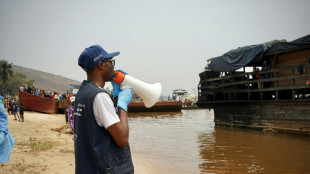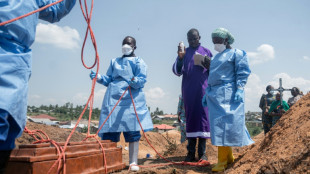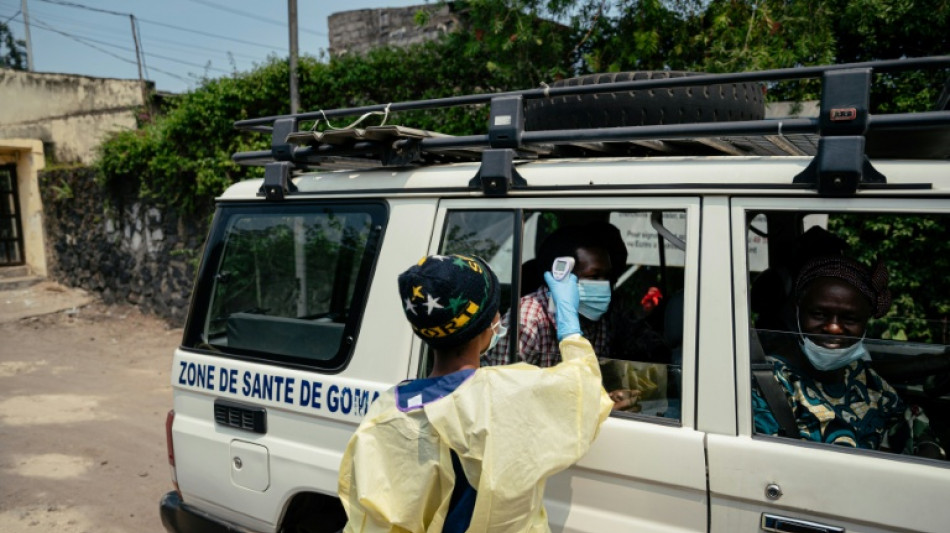
WHO worried about 'scale and speed' of deadly Ebola outbreak / Photo: Jospin Mwisha - AFP
The World Health Organization chief voiced concern on Tuesday about the "scale and speed" of an Ebola outbreak in the Democratic Republic of Congo which has killed an estimated 131 people.
The WHO has declared the surge of the highly contagious haemorrhagic fever an international health emergency and will hold an emergency meeting on the crisis on Tuesday.
No vaccine or therapeutic treatment exists for the Bundibugyo strain of Ebola responsible for the latest outbreak of the disease, which has killed more than 15,000 people in Africa in the past half century.
With the new outbreak largely concentrated in difficult-to-access areas, few samples have been laboratory-tested and figures are based mostly on suspected cases.
"We have recorded roughly 131 deaths in total and we have around 513 suspected cases," Congolese Health Minister Samuel Roger Kamba said on national television early Tuesday.
"The deaths we are reporting are all the deaths we have identified in the community, without necessarily saying that they are all linked to Ebola," he added.
The previous figures from the outbreak, declared late last week in the country's east, gave a total of 91 dead out of 350 suspected cases.
WHO chief Tedros Adhanom Ghebreyesus said the decision to declare the second-highest level of alert under international health regulations was not taken "lightly".
"I'm deeply concerned about the scale and speed of the epidemic," he told the World Health Assembly in Geneva on Tuesday.
The outbreak's epicentre is in northeastern Ituri province on the border with Uganda and South Sudan.
As a gold-mining hub, it sees people regularly crisscrossing the region and has been plagued by clashes between local militias for years.
The virus has already spread into neighbouring provinces, as well as beyond the DRC's borders.
- 'Mystical illness' -
Suspected cases have been reported in the commercial hub of Butembo in neighbouring North Kivu province, some 200 kilometres (125 miles) away from the epidemic's ground zero, Kamba said, without giving further details.
Another case has been recorded in Goma, North Kivu's key provincial capital currently under the control of the Rwanda-backed M23 anti-governmental armed group.
"Unfortunately, the alert was slow to circulate within the community, because people thought it was a mystical illness, and so, as a result, the sick were not taken to the hospital," Kamba said.
The Africa Centres for Disease Control and Prevention (Africa CDC) has declared the outbreak a continental public health emergency.
The step enables the Africa CDC, based in Ethiopia, to mobilise extra resources including emergency response teams and surveillance operations.
Tedros said that 30 cases had been confirmed to be Ebola in Ituri province.
"Uganda has also informed WHO of two confirmed cases in the capital of Kampala, including one death among two individuals who travelled from DRC," he told the annual meeting of the health agency's decision-taking body.
A US citizen has tested positive for the virus following exposure related "to their work" in the DRC, the US Centers for Disease Control and Prevention said.
The patient is due to arrive in Germany for treatment, the German health ministry said on Tuesday.
The United States has announced it was bolstering precautions to prevent the spread of Ebola, including screening air passengers from outbreak-hit areas and temporarily suspending visa services.
It is attempting to evacuate six additional people to monitor their health, the US Centers for Disease Control and Prevention (CDC) said on Monday.
First identified in 1976 and believed to have originated in bats, Ebola is a deadly viral disease spread through direct contact with bodily fluids. It can cause severe bleeding and organ failure.
The outbreak is the 17th in the central African country of more than 100 million people.
The deadliest Ebola outbreak in the DRC claimed nearly 2,300 lives out of 3,500 cases between 2018 and 2020.
The previous outbreak before the current one killed 45 people between September and December last year, the WHO said.
E.Goossens--JdB