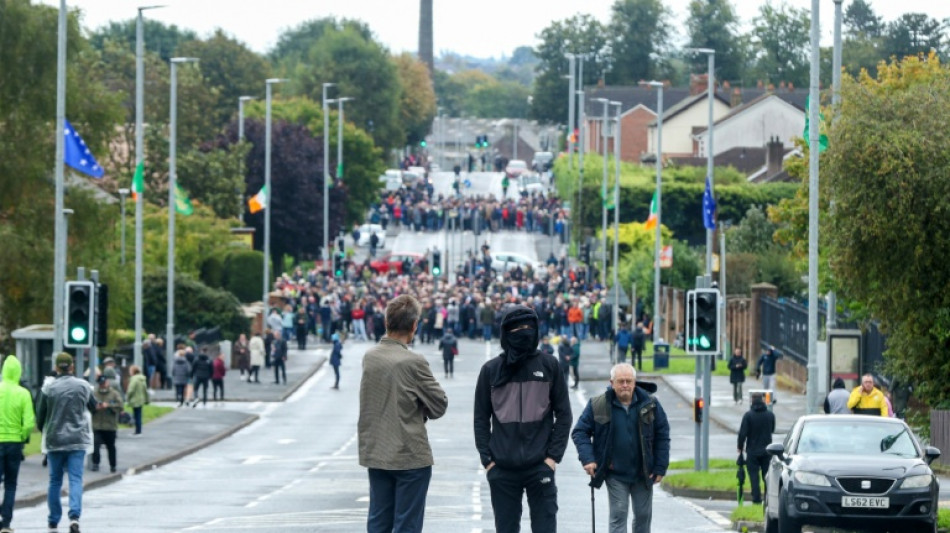
UK PM urges 'calm' as thousands block flashpoint N.Ireland parade / Photo: Paul Faith - AFP
UK Prime Minister Andy Burnam urged "calm" Sunday as thousands of people rallied to block a pro-British Protestant march from passing through a mainly Catholic area for the first time in 28 years, triggering an hours-long standoff.
The tensions spiked after a Belfast court in the early hours of Sunday cleared the march by the Orange Order to go ahead for the first time since 1997.
The Parades Commission, Northern Ireland's independent body regulating contentious processions, had authorised 35 Orangemen to march silently along Garvaghy Road in Portadown, without bands or supporters from 8:00 am (0700 GMT) Sunday.
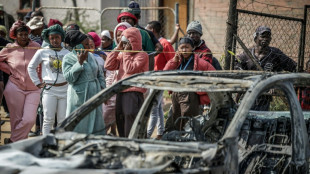
But hours later the group of Orangemen remained blocked in a church, while about 2,000 local residents ignored torrential rain to fill the streets and bar their path.
Burnham appealed for "calm on all sides", adding in an interview with BBC television that "big gains" had been made in Northern Ireland "and we don't want to see things go backwards".
Northern Ireland was blighted for three decades by conflict between largely Catholic, pro-Irish republicans and Protestant, pro-UK unionists, and the Garvaghy Road became a major flashpoint during the late 1990s.
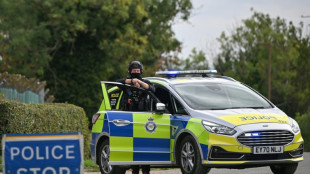
There was a heavy security presence on Sunday in the Portadown area, 25 miles southwest of Belfast, with armoured police vehicles and a helicopter whirring overhead.
Northern Ireland First Minister Michelle O'Neill, of the Irish republican Sinn Fein party, condemned the late-night court ruling allowing the march to go ahead.
"Our message tonight is clear. There is no going back. Not tomorrow. Not ever," said O'Neill.
She said she supported "the right of the Garvaghy Road residents to protest against this unwanted sectarian march".
Sinn Fein President Mary Lou McDonald told reporters as she walked with the counter-protesters that the "residents and community have come out to defend their right to live free from sectarian harassment".
Since the 1998 Good Friday peace accords ending the so-called Troubles in Northern Ireland "there has been lots of progress ... it has been transformational. People's lives have been changed fundamentally," she said, adding "we are not going back".
- Legal challenges -
But Democratic Unionist Party (DUP) leader Gavin Robinson said there should be "unanimous condemnation" of O'Neill accusing her of "breaking the law" by ignoring the will of the courts.
"Our party is maintaining the dignity of the Portadown Orangemen as they have shown determination and patience so will we," he told reporters.
The procession had survived a series of last-minute legal challenges.
A Belfast High Court judge temporarily blocked it on Saturday, warning that the long-running dispute could escalate across Northern Ireland and urging the parties to "step back from the abyss".
But shortly before midnight, a three-judge Court of Appeal panel overturned the injunction, ruling that the judge had "erred in law".
The substantive legal challenge was returned to the High Court, but the appeal decision left the procession free to begin at 8:00 am (0700 GMT) on Sunday.
Carla Lockhart, a local MP from the pro-British Democratic Unionist Party, called the appeal overturn "seismic" and said residents had nothing to fear.
"Thirty-five men walking down a road silently with no bands in an orderly fashion; there is nothing to fear," she said.
The confrontation, known as the Drumcree dispute after the church attended by the marchers, became a major flashpoint during the late 1990s.
Attempts to force the parade through, or prevent it from proceeding, repeatedly triggered serious disorder.
The Parades Commission was established in 1998, the year the Good Friday Agreement largely ended three decades of conflict over British rule known as the Troubles.
It barred the Order from completing the route that year and has consistently rejected subsequent applications.
The issue was revived in August when the High Court quashed the commission's latest restriction because of procedural failings, without ruling that the Order had a right to march along Garvaghy Road.
The Order then submitted a fresh application, leading to Friday's decision permitting the restricted procession.
W.Lejeune--JdB