Venezuela quake survivors seek food, shelter as toll rises to nearly 2,000
Tens of thousands of people urgently need food and shelter in Venezuela after the two devastating earthquakes that killed nearly 2,000, the UN said on Tuesday, as doctors warned of outbreaks of disease with survivors sleeping in the streets.
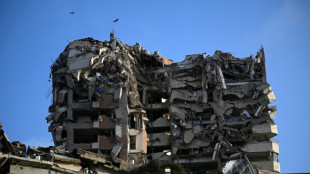
Last week's 7.2 and 7.5 magnitude shocks -- one of the worst earthquake disasters in Latin America -- collapsed whole residential complexes, left tens of thousands unaccounted for and prompted frantic search-and-rescue operations for survivors trapped in the rubble.
The UN refugee agency said "food shortages are widespread, basic services have broken down and connectivity has been largely severed" in the port city of La Guaira -- the worst hit area north of the capital Caracas.
"They give out supplies here, but sometimes people nearly kill each other for food...it's like a cockfight," said Daniela Armas, 18, a vendor in La Guaira who was injured falling from a motorbike during the quakes.
In a daily update, Venezuela's National Assembly President Jorge Rodriguez said deaths had risen to 1,943, with more than 10,500 injured after one of Latin America's worst earthquake disasters.
He said nearly 6,500 people had been rescued from the rubble in La Guaira, but that number was likely closer to 20,000 including those who escaped or were helped out by family.
Many Venezuelans have expressed anger at the government's slow response to the disaster in a country already struggling with decades of economic crisis that has weakened infrastructure and health services.
The UN agency said it needed some $14.85 million to scale up aid and temporary shelter for 30,000 people over six months.
"Community tensions are rising as access to assistance remains constrained," UNHCR spokesperson Carlotta Wolf said.
The quakes likely damaged or destroyed 58,870 buildings, according to a preliminary assessment of satellite data published by NASA.
World Health Organization spokesman Christian Lindmeier said health services in Venezuela were overstretched and under "extreme pressure."
"There's an increased risk now of outbreaks of vaccine-preventable diseases" such as measles and diphtheria, due to low pre-earthquake vaccination coverage, he said.
- Bare hands -
With international rescue teams from the US, Mexico and dozens of other countries scrambling with trained dogs and heavy equipment to dig out survivors, Venezuelans began burying the dead they could find.
Others were frantically searching by hand for missing loved ones in the rubble, but also in hospitals and morgues.
"It's harder not knowing because you ask yourself, 'What do I do? Where do I look for her?" said Rosanna Luna, looking for her sister Soraida in the wreckage of her home.
AFP journalists on Monday saw black body bags containing victims of the quake lined up near a makeshift morgue at the dock in La Guaira, where many people came for news or to identify remains.
Darvin Silva, 37, described how he battled to reach his mother, who died under a pillar in a collapsed building.
"The effort it took me to get her out of there with my bare hands, with sledgehammers, with pickaxes... you can't even begin to imagine," he said.
"I hope that I can now offer her the rest she deserves," he said.
The critical 72-hour window during which survivors were still likely to be found closed on Saturday evening.
But rescuers in hard hats and high-visibility vests were still picking through the twisted metal and shattered concrete.
Around 50,000 people are still listed as missing, according to the UN.
- Body bags -
Some seven million people in Venezuela would be affected by the disaster, the UN has said, with the quakes knocking a $6.7-billion hole in the economy -- or six percent of Venezuela's GDP.
A total of 27 countries have mobilized nearly 40 search-and-rescue teams. They include more than 2,000 troops and personnel, along with more than 160 dogs, according to Gianluca Rampolla, the UN coordinator in Venezuela.
The world body is providing 10,000 body bags, though it hopes the final toll will be lower.
At the makeshift morgue at La Guaira's port, many are still waiting for the remains of their loved ones who are presumed dead.
"My family is there -- I'm told my sister and her children are there, as well as the children of my brother," Wilker Molalla told AFP as he waited to identify the remains.
"There were 11 people in my household," he said. "Only two of us survived because we were at work."
burs/phz/ksb/pma/cb/mjf
T.Bastin--JdB