Oil plunges, stocks jumps as Iran declares Hormuz open / Photo: TIMOTHY A. CLARY - AFP
Oil prices plunged more than 10 percent on Friday after Iran said the Strait of Hormuz would be "completely open" for the rest of the ceasefire with the United States, and stock markets surged.
Iran's Foreign Minister Abbas Araghchi said on X that "passage for all commercial vessels through Strait of Hormuz is declared completely open for the remaining period of ceasefire".
The strategic waterway, through which one-fifth of the world's crude oil normally flows, has been disrupted by Iran since the US-Israeli offensive began, sending oil prices to a peak of nearly $120 a barrel and threatening to disrupt the global economy.
Both the benchmark international contract Brent and its US equivalent WTI fell below $90 per barrel.
"This news is having an immediate impact on markets," said Kathleen Brooks, research director at XTB.
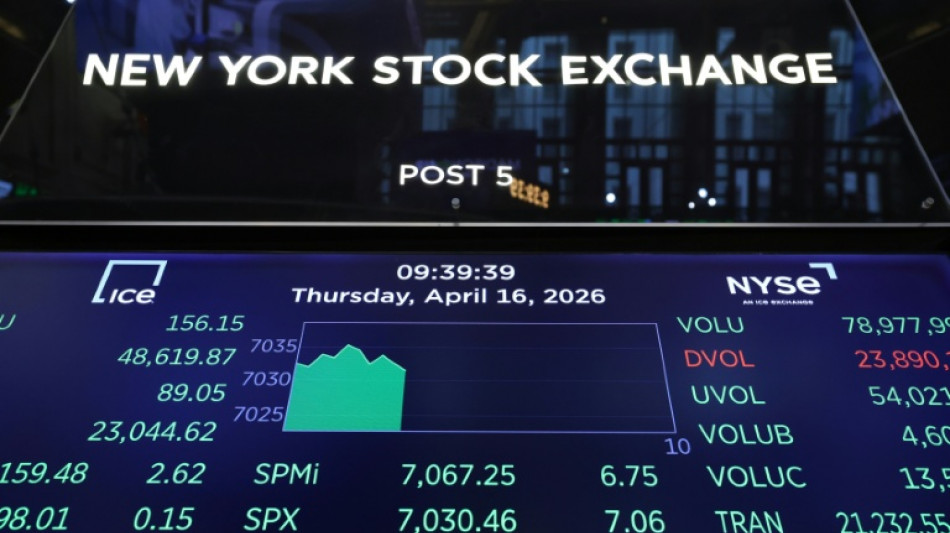
Wall Street's main stock indices jumped at the opening bell, with both the S&P 500 and the Nasdaq Composite building on record highs struck the previous evening.
"This is the biggest development so far during the ceasefire, and it gives hope that the war will end soon, and supply chains will return to some normality," Brooks said.
It was not clear whether Araghchi was speaking of the 10-day truce agreed by Lebanon and Israel that went into effect at midnight or an earlier two-week truce between Iran and the United States that began on April 8.
But Araghchi's declaration bolstered hopes for further peace talks and a renewal of the the ceasefire, despite US President Donald Trump saying that the US blockade of Iran's ports remains in force.
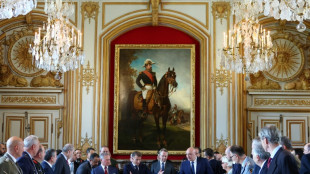
French President Emmanuel Macron and UK Prime Minister Keir Starmer were chairing a meeting of allies Friday to consider sending a multinational force to ensure free-flowing trade in the Strait of Hormuz once the conflict ends.
David Morrison at Trade Nation noted that the speed and the magnitude of the rebound of the S&P 500 -- nearly 12 percent in just over two weeks -- was reinforcing the rally.
"The sharpness of the move has caught many investors offside, particularly those who sold during the first few weeks of the war, either to flatten their exposure or go net short," he said.
"Now these investors are having to pay up to re-establish their existing positions, or cover their shorts and suffer painful losses."
He said the "fear of missing out" effect is also back as stock indices move into record territory, especially as the first-quarter reporting season is showing strong earnings growth.
European stocks were higher in afternoon trading, with both Frankfurt and Paris gaining two percent.
Asian stock markets mostly closed lower, with Tokyo among the biggest losers after reaching a record high Thursday, and Taiwan's TAIEX index dropped after hitting a market capitalisation of $4.14 trillion.
That put the index ahead of London's benchmark FTSE 100 and made the TAIEX the world's seventh-biggest index by value, according to Bloomberg data.
- Key figures around 1330 GMT -
Brent North Sea Crude: DOWN 9.9 percent at $89.56 a barrel
West Texas Intermediate: DOWN 10.2 percent at $81.88 a barrel
New York - Dow Jones: UP 1.3 percent at 49,221.56 points
New York - S&P 500: UP 0.7 percent at 7,092.15
New York - Nasdaq Composite: UP 0.9 percent at 24,317.32
London - FTSE 100: UP 0.5 percent at 10,64.51
Paris - CAC 40: UP 2.0 percent at 8,427.69
Frankfurt - DAX: UP 2.2 percent at 24,688.97
Tokyo - Nikkei 225: DOWN 1.8 percent at 58,475.90 (close)
Hong Kong - Hang Seng Index: DOWN 0.9 percent at 26,160.33 (close)
Shanghai - Composite: DOWN 0.1 percent at 4,051.43 (close)
Euro/dollar: UP at $1.1833 from $1.1784 on Thursday
Pound/dollar: UP at $1.3579 from $1.3529
Dollar/yen: DOWN at 158.41 yen from 159.14 yen
Euro/pound: UP at 87.17 pence from 87.09 pence
burs-rl/js
M.Kohnen--JdB