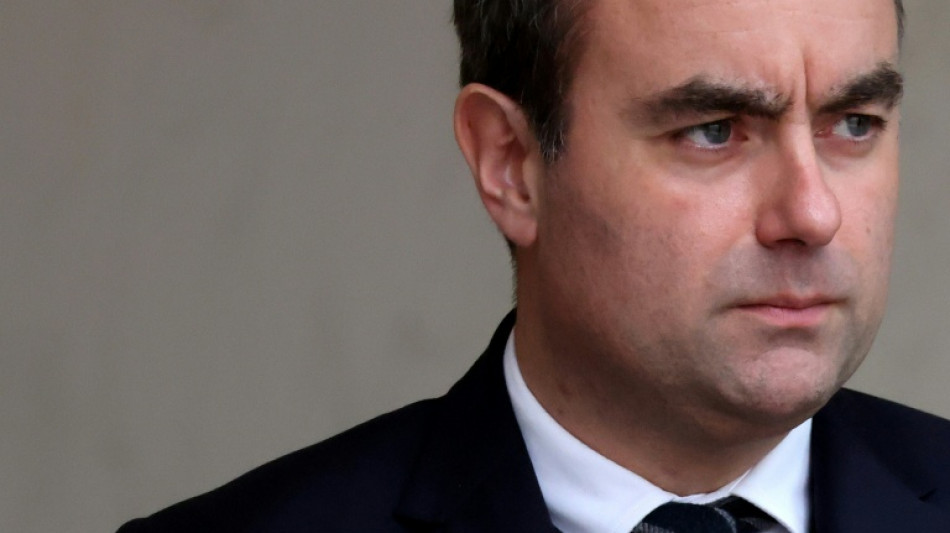
French PM forces final budget through parliament / Photo: Ludovic MARIN - AFP
French Prime Minister Sebastien Lecornu forced his budget through parliament without a vote for the third and final time Friday, exposing him to yet another no-confidence motion.
The decision to use the constitutional tool known as article 49.3 has marked an about-face for Lecornu, who pledged last year to seek parliament's approval, in a bid to avoid the fate of his two predecessors who were ousted over budget negotiations.
But after months of negotiations reached an impasse, Lecornu announced he would use the power to force the budget, after making concessions to gain the backing of the Socialists.
"France must have a budget. And so, before this chamber, I am committing the government's responsibility for the entire Finance Bill for 2026," he told the National Assembly on Friday while invoking the power to push it through.
His opponents, including the hard left and far-right parties, have vowed to file no-confidence motions against him in response.
The motions are expected to be debated and voted upon Monday, according to lawmaker Eric Coquerel who chairs the finance committee.
If Lecornu survives, as anticipated based on his previous support, the budget will move forward for definitive adoption.
The Socialist party has "tightened the screws" on its members to fall in line and back the government, Coquerel lamented.
Lecornu has already endured a string of no-confidence votes in recent weeks as he pushed the first sections of the 2026 state budget through parliament without a vote.
On Tuesday, Lecornu defended his decision, touting what he called a "breakthrough" budget that would boost defence spending by 6.5 billion euros ($7.78 billion) and urging a "long-term" view.
Although some lawmakers have expressed doubts, the text aims to bring the deficit down to five percent of the gross domestic product (GDP) in 2026 from 5.4 percent in 2025.
The executive was initially targeting 4.6 percent, but the scrapping of pension reforms meant such a reduction of the deficit was not possible, according to rapporteur Philippe Juvin.
The various concessions made for the Socialists include a one-euro meal for students and an increase in a top-up payment for low-income workers.
Despite being "imperfect" the budget "is a useful text for the French, because it allows us to emerge from the climate of uncertainty that has set in over the past few months," Public Accounts Minister Amelie de Montchalin said on Thursday.
The eurozone's second-largest economy has been bogged down in political crises since Macron called a snap poll in 2024, in which he lost his parliamentary majority.
M.F.Schmitz--JdB