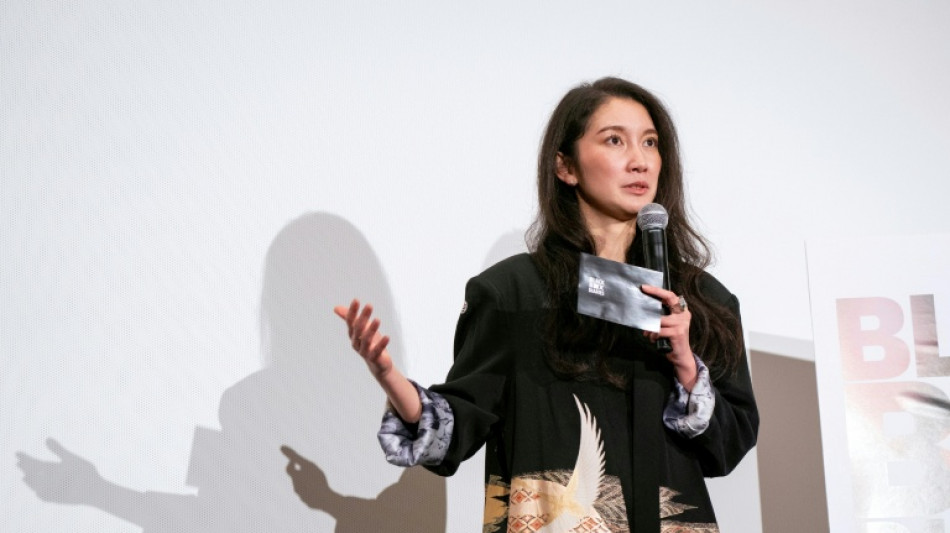
Oscar-nominated #MeToo film finally screened in Japan / Photo: Kazuhiro NOGI - AFP
A Japanese #MeToo campaigner's documentary premiered in her homeland on Friday after months of delays, with one audience member telling AFP she hoped it triggered a change in society.
Shiori Ito won a landmark 2019 civil case against a Japanese TV reporter accused of raping her -- a charge he denies -- and turned her ordeal into a film released last year and screened worldwide.
But some segments of "Black Box Diaries" contained video and audio that had been clandestinely shot or meant only for use in court, resulting in its Japan release being significantly delayed.
Publicist Toei Advertising announced last month the Oscar-nominated film would finally be shown in Japan after "revisions and adjustments" had been made.
"I've spent the last 10 years making this film thinking it was going to be a love letter to Japan", Ito told a screening event at a Tokyo cinema on Friday.
"It means a lot to me that this film was released in Japan, where I grew up and where I want people to face this issue," she said.
Ito, who received vicious online criticism for going public, had previously said that despite several high-profile cases, Japan has never seen an outpouring of #MeToo allegations.
Government surveys in Japan show few rape victims report the crime to the police, although the number of consultations at sexual violence support centres is rising.
"Black Box Diaries" tugged at the heartstrings of many who watched it Friday at cinema T-Joy Prince Shinagawa in Tokyo.
"I couldn't watch it without crying. It's a wonder that she's alive today, and I have nothing but full respect," Yuko Ono, a publishing house employee in her 60s, told AFP.
- 'Suffered in silence' -
The film alleged that police attempts to arrest ex-journalist Noriyuki Yamaguchi, who Ito accuses of raping her in 2015, were aborted at the last minute at the order of "higher-ups".
Yamaguchi is known for having had close links with then-prime minister Shinzo Abe.
"She persistently forced open the monolithic police organisation -- that can greatly empower all these people who have suffered in silence," Ono said.
Niko Nagata, a 20-year-old university student, agreed.
"Sexual violence is a particular kind of crime with high risks of re-victimisation, and so-called rape myths remain strong," she told AFP.
"I hope the film will hammer home the severity of sexual violence to many, and trigger a change in society."
Ito also acknowledged that "various opinions" surrounding the documentary "made me feel very apologetic".
Some revisions were made to the latest edition screened, including editing out scenes and rendering some individuals unidentifiable, the director explained in a statement Friday.
Ito's former lawyer, Yoko Nishihiro, said in a statement reported by local media Thursday that the film was "freighted with serious human rights issues".
The lawyer and her team previously highlighted a secretly recorded phone conversation and other footage used without permission, including hotel CCTV shown in court.
A.Parmentier--JdB