Days of heavy rain leave at least 13 dead in Philippines / Photo: Ted ALJIBE - AFP
Floods, landslides and accidents driven by a nine-day downpour equivalent to more than a month's worth of rain in some areas have killed at least 13 people in the northern Philippines, rescuers said Monday.
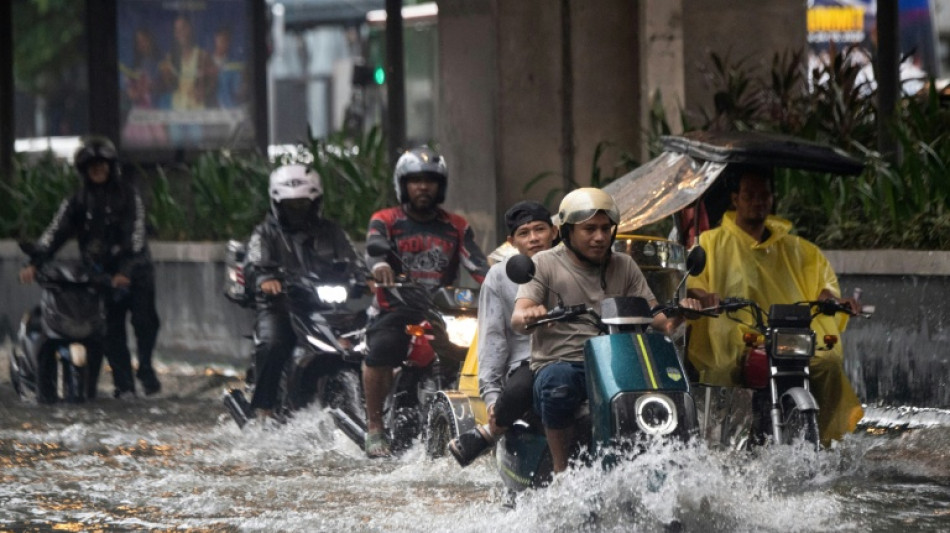
The rains, exacerbated by tropical storms, have led to school and government office closures across the main island of Luzon and flooding in the streets of Manila.
Four of the deaths occurred in the mountain resort of Baguio, as a rain-drenched mountainside collapsed on several houses, killing four residents, city disaster official Charles Carame told AFP.
Rescuers were digging through the rubble in search of at least six others who remained missing a day after the incident, he added.
State weather forecaster Dan Villamil said rains in the vacation spot four hours north of the capital were already 47 percent higher than normal for the whole month.
"The rainfall recorded for August 1-9 was highest in Baguio, with an accumulated 1,413.2 millimetres (56 inches)," he said, adding the city's typical downpour for the month was 963.2 millimetres.
Parts of Metro Manila had recorded rain equivalent to about 90 percent of a typical August, he added.
Landslides killed six other people elsewhere on Luzon, while another drowned, one was hit by a falling tree, and one was electrocuted, according to a civil defence office tally.
While heavy rain continued to fall early Monday evening, Public Works Secretary Vince Dizon told a news conference that floodwaters were receding.
"Our interventions are continuing, but we really need to fix the years and decades' worth of faulty flood mitigation interventions," Dizon told reporters, referencing a scandal over bogus flood-control projects that have cost taxpayers billions of dollars.
The Philippines is the first major landmass facing the Pacific cyclone belt, and the archipelago is hit by an average of 20 storms and typhoons each year, putting millions of people in disaster-prone areas in a state of constant poverty.
Scientists say human-driven climate change is making extreme weather more frequent, prolonged and intense.
R.Cornelis--JdB