Economic uncertainty looms over Venezuela quake zone / Photo: MARTIN BERNETTI - AFP
Economic woes have joined the long list of worries facing Venezuelans living in the coastal region that suffered unthinkable damage during twin tremors a fortnight ago.
"What am I going to do? Where am I going to work? What am I going to achieve? Where am I going to get money?"
Faisuris Alvarez, who runs a beachside fish stand, agonized aloud over these questions without answers.
The coastal city of La Guaira is located just north of Caracas and usually serves as the perfect seaside getaway for residents of the capital.
But the 7.2 and 7.5 magnitude earthquakes on June 24 decimated the city, with mountains of rubble replacing the high-rise buildings that once lined the coast.
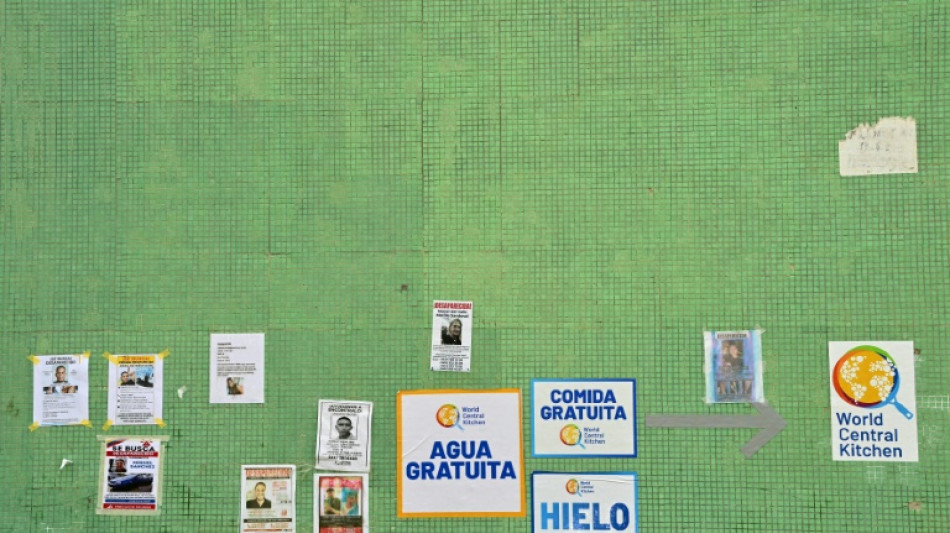
The disaster has claimed over 4,000 lives and injured almost 17,000 more people, and questions about the economic impact abound.
The United Nations Office for Disaster Risk Reduction estimates losses of almost $37 billion in material damage alone.
Jobs, goods and services have all but disappeared, with uncertainty coloring the future.
"In addition to direct losses, there are usually indirect effects on trade, transportation, supply chains, employment and consumption," said economist Asdrubal Oliveros.
- Limbo, looting -
Alvarez's coworkers reassure her that annual visitors to the resort town will be back next year. But for now she and dozens more people who work the same spot are left in limbo, without an income.
"The guy who sells clams, the one who sells boiled eggs, the one who sells green mango with salt, the wafer seller, the ice cream seller... What's become of those people?" the 39-year-old asked.
Luis Baena gazed at the charred remains of his warehouse, which was destroyed during the quakes and then looted and burned in the chaotic aftermath.
The businessman filmed people making off with over six containers of lighting equipment the morning after the tremors, appealing for help on social media but to no avail.
Little now remains of his family business "Bilight," which once employed more than 60 other households in La Guaira.
"The efforts of so many families and so many people who depend on this place are at stake right now," Baena told AFP.
"It's tough," the 52-year-old said tearfully as he looked at the destroyed business he ran with his brother.
- Getting 'back on track' -
While any semblance of normal life has been shattered for some, it is tentatively resuming for others.
In Maiquetia -- La Guaira's economic hub where the port and airport are located -- businesses are opening their doors again.
Hairdresser Anabel Delgado waited for customers outside the salon where she works.
The 56-year-old believes she survived the horrific quakes for a reason.
"If God left us here, it is so we can offer comfort, carry on and keep fighting for those of us who remain," Delgado said.
She has not received many clients yet, but there are signs of recovery.
"This is something that takes time, getting back to normal," said shopkeeper Enio Fernandez, 49. "Everything is going to get back on track."
The quake zone's ability to get back on its feet depends on the success of the state in overseeing recovery.
"Reconstruction can become a driver of economic activity, but only if there are sufficient resources, institutions capable of carrying it out, and rules that generate confidence for investment," said Oliveros.
As rescue teams wind down efforts to salvage survivors from the rubble, and as residents leave the city -- due to dire economic prospects, trauma or both -- the streets appear more deserted than ever.
But Baena the businessman is convinced the people will "fight for La Guaira."
"Together we will make this a livable place," he said.
D.Mertens--JdB